Marketing for marketing agencies: how to win clients for yourself
Agency marketing for your own agency: how clients choose an agency, what to set up first, and a realistic week of work, ideas and case studies that books calls.

Most agencies market everyone except themselves. Client work always comes first, so your own LinkedIn goes quiet, your case studies wait half written, and new business depends on whoever happens to refer you this quarter. This guide is about the other side: how your agency wins its own clients, steadily, with a plan you can keep in a busy week.
What actually brings clients to a marketing agency
Clients hire an agency they believe will understand their problem and get results. They rarely decide from one post. They see your work, hear your thinking, ask someone they trust, and then book a call. A few things move that.
- Referrals. Happy clients, former colleagues, freelancers and partner agencies send much of the work. People who move to a new company often bring their agency with them.
- Work with results. Clients buy an agency for its work. A finished project with the result it brought, told plainly, does more than any claim on your homepage.
- A clear niche. "We run paid social for food brands" is easier to remember and recommend than "full-service digital agency".
- Your point of view. The founders and team members who share how they think on LinkedIn get remembered when a brief comes up.
- Google and AI answers. People search "branding agency for fintech" or ask ChatGPT "which agency can help a coffee brand grow online?". A website with clear service pages and real case studies helps you show up.
- Real faces. Clients work with people, not logos. A team they have already seen feels safer to hire.
Agencies share a lot with other firms that sell their know-how and their time. You can see how the same plan works for them under Experts and services.
What is mostly a waste of time: posting your own trend reports nobody asked for, being on every platform because you know how, and awards entries that no buyer reads.
Start here: the first steps, in order
- Say who you are for in one sentence. The kind of client and the problem you solve. Put it on your homepage, your LinkedIn Company Page and every founder's headline.
- Write three case studies. One client each: the problem, what you did, what changed. Use real results, with the client's permission. These are your best sales pages and your best posts.
- Set up LinkedIn properly. A complete Company Page, and a personal profile for each founder and lead that says who you help. Personal profiles usually reach more people than the Company Page.
- Make booking easy. One "Book a call" button on every page, with a short form. Reply the same day.
- Ask happy clients for a review or two sentences. On Google, on LinkedIn, or for your website. Make it easy, and ask right after a result lands.
- Build a referral habit. Keep in touch with past clients who moved jobs, and with freelancers and partner agencies who see work you could take. Thank everyone who sends a lead.
A realistic week
Your own marketing needs the same discipline you give a client, in less time. Here is the week Huuve plans for an agency: LinkedIn as the main channel, Instagram for the team, and X for sharp takes.
A week of marketing for an agency
The plan Huuve runs for agencies: 4 channels, what goes on each one and why. The week Studio North gets.
Marketing channels
 LinkedIn4 posts a weekWhere the briefs come from. Client-work breakdowns book discovery calls.
 Instagram3 posts a weekWhere the team gets seen. People follow faces more than logos.
 X (Twitter)2 posts a weekSharp takes travel, and a good one can bring in a brief.
- LinkedIn AdsYour buyers are on LinkedIn, and ads put your best case study in front of the right people. Huuve plans and writes the ads and you approve every one.
 Google AdsPeople search for an agency in their niche, and a Google ad puts you in front of them. Huuve plans and writes the ads and you approve every one.
 RadarFounders ask for agency recommendations online, and Radar finds those requests early. You answer the ones that matter first.
What to post
- Work you are proud of35%Finished projects with the result they brought. Clients buy an agency for its work, so show it.
- Send the before and after of a project you finished
- Share the result a client got: more sales, leads or visits
- How you think25%Your point of view on your field: what works, what is overrated, what is changing. It shows clients how you would think about their problem.
- Tell us one mistake you see clients make again and again
- Give your take on a trend everyone talks about
- Behind the scenes20%The team at work: sketches, meetings, the messy middle of a project. It makes the agency feel human and lets clients picture working with you.
- Take a photo of the whiteboard after a workshop
- Film 15 seconds of the team reviewing a design
- Client stories20%One client's problem, what you did and what changed. Case studies turn interest into a booked call.
- Tell us about one client: the problem, what you did, the result
- Ask a client for two sentences about working with you
Where it goes. LinkedIn gets four posts a week, because that is where briefs and buyers come from, and breakdowns of client work start conversations. Instagram gets three, because your team gets seen there and real faces earn more trust than logos. X gets two sharp opinions that reach founders who do not know you yet. LinkedIn ads and Google Ads come later, once your case studies are written.
What to post. The biggest share is work you are proud of, with the result it brought. Then how you think, behind the scenes, and client stories. A few examples:
- The before and after of a project you finished, with one line on why it works.
- "A mistake we see clients make again and again, and what we do instead."
- Your take on a trend everyone talks about, in five plain sentences.
- A photo of the whiteboard after a workshop.
- One client: the problem, what you did, the result.
- Fifteen seconds of the team reviewing a design.
The project images, photos and clips come from you and your team. Huuve writes the case study posts, the opinions and the captions from what you tell it, and plans which piece goes where.
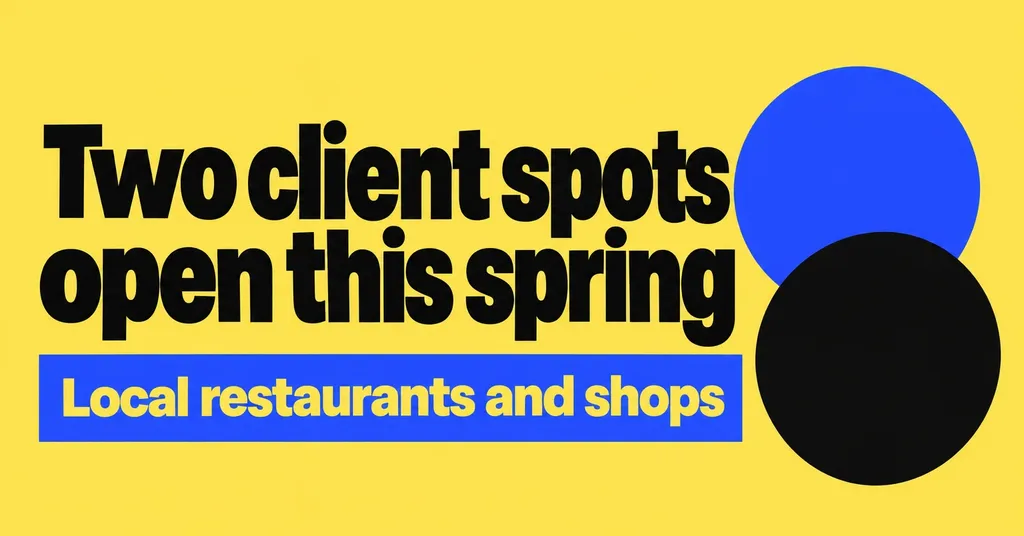
Posts for Field Day Creative







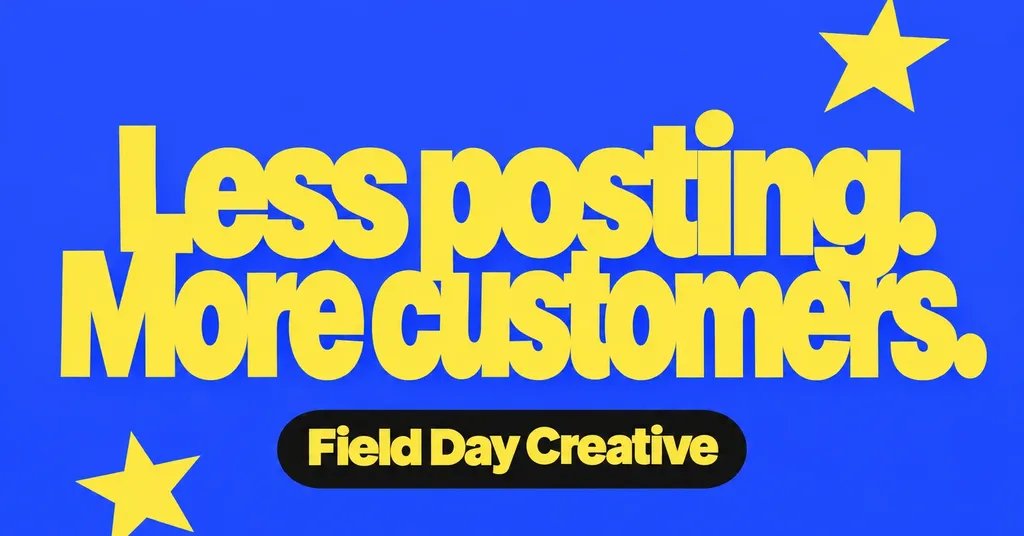
Ads for Field Day Creative

What to answer. Every inquiry the same day, even if only to book a call. Founders also ask for agency recommendations in online communities and on LinkedIn, and a helpful answer while the question is open often beats a cold pitch.
What to look at. Calls booked this week, and where each lead came from.
Plan for your seasons. Many clients plan budgets in the fall, so share your best case studies before planning starts. January brings new budgets and new briefs, so be visible and quick to reply. Summer is often slower for new business, so use it to write case studies and update your website.
What to measure
Likes from other agencies do not pay the team. Watch these:
- Discovery calls booked, and where each lead came from.
- Proposals sent and won.
- New clients signed by source: a referral, LinkedIn, Google, an AI answer or a partner.
- Inquiries that fit your niche. If many do not, your message needs work, not more reach.
- Referrals from past clients and partners.
Ask every new client "How did you find us?" and keep it with the deal. After a few months you will see which channel brings the clients you actually want, and which only brings attention. Put more of your week there, and let the rest go.
Do's and don'ts
A few things to weigh before you spend your own budget.
- Start with your proof. Case studies, a clear website and an active LinkedIn cost little and keep working.
- Ads come second. Once you know which case study starts conversations, LinkedIn ads can put it in front of the right buyers, and Google Ads can catch people searching for an agency in your niche. Send each ad to the matching case study or service page.
- Ask before you share client work. Get the client's permission before you post their work or their results, and follow what your contract says.
- Maps and AI answers. Local clients still search "agency near me", so keep your Google Business Profile complete. AI answers win questions about a niche or a problem. Both reward clear service pages, real case studies and honest reviews.
Do
- Say who you are for in one sentence
- Show real work with the result it brought
- Post from the founders' own profiles, not only the Company Page
- Keep your own posting going in busy weeks
- Get client permission before you share their work
- Ask every new client how they found you
Don't
- Call yourself full-service for everyone
- Post only awards and team parties
- Write for other agencies instead of buyers
- Let your own LinkedIn go quiet when client work piles up
- Share client results without their permission
- Run ads before your case studies are written
Get set up
These are the first channels to set up, with a guide for each. Connect your own AI too, so you can plan and write from ChatGPT or Claude.
- Set up your LinkedIn Company PageCreate the Page, complete it, and learn what gets reach on LinkedIn.
- Set up an Instagram Business accountSwitch to a professional account and get your profile ready to publish and measure.
- Set up X for your businessCreate the account, complete the profile, and learn the rhythm that works on X.
 Switch on SEO for your websiteWhat Huuve checks on your website every month, and how the fixes reach you.
- Connect Huuve to ChatGPT or ClaudePlan, write and answer in your own words, right inside your AI.
Frequently asked questions
More marketing guides like this





Where to start today
Write your one sentence: who you are for, and what you solve. Put it on your homepage and in each founder's LinkedIn headline. Then pick the client project you are proudest of this year and ask the client if you may share it. That case study is your first post and your best sales page.
The two things that matter most
Whatever you choose to do, two things decide whether your marketing grows: being consistent and being data-driven. Show up every week, not in bursts, because people forget a business that goes quiet. And look at what actually brought customers in before you plan the next week, so you do more of what works. Without both, you are mostly guessing, and growth comes and goes.
Let Huuve do it for you
Huuve does all of this for you on autopilot. It plans every week from what brought customers in, writes the posts and keeps you consistent, while you spend about 15 minutes approving it. That can save you 10+ hours a week. See how it works, or ask your own AI if Huuve fits you.

Try Huuve for 30 days
Connect LinkedIn, Instagram and X, and press Start. Your agency gets its own steady week, and you approve it in about 15 minutes.
From $149 a month
30-day money-back guarantee