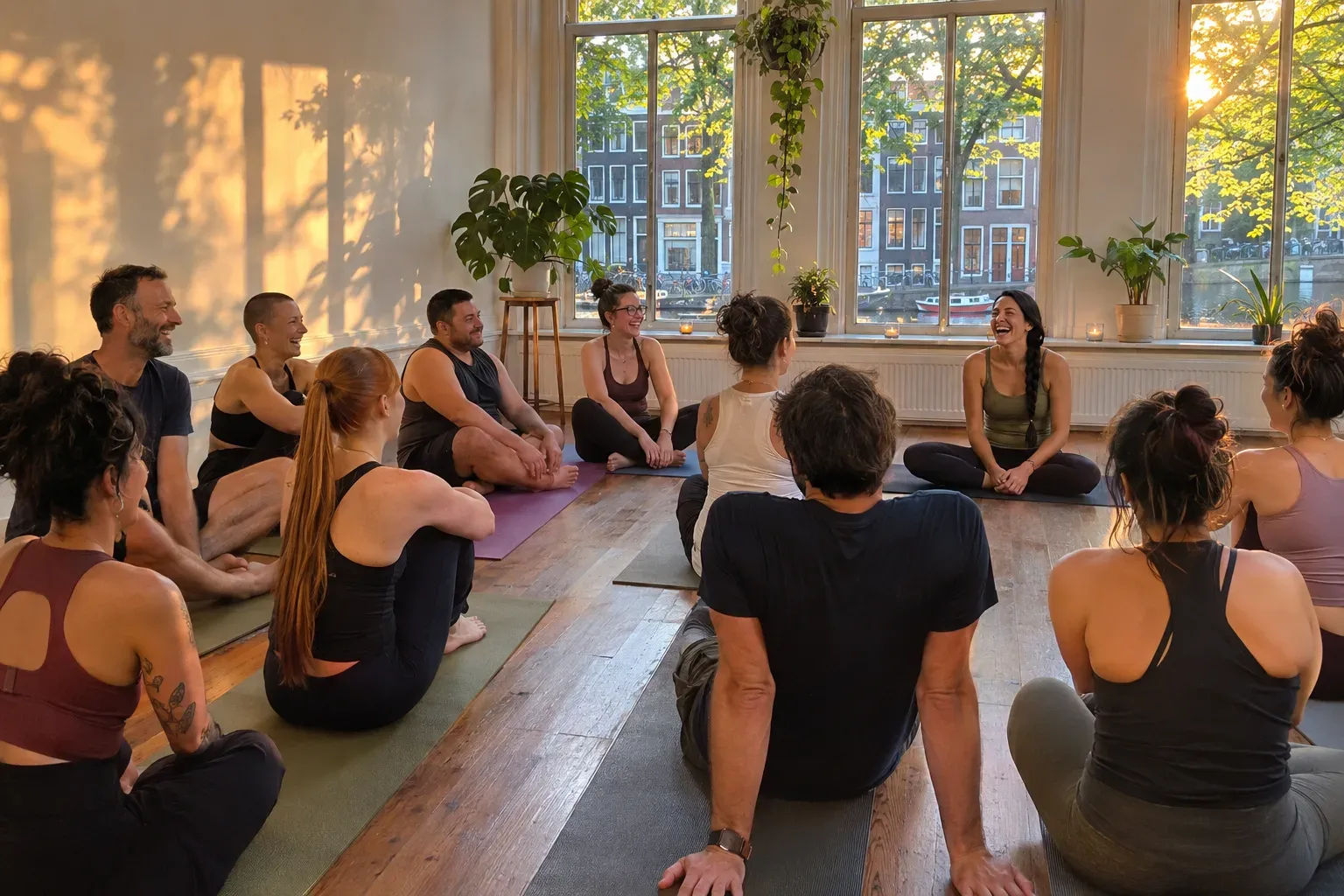
Walking into a new studio for the first time takes courage. People worry they will be the least flexible, the least fit, the only one who does not know the moves. Your marketing has two jobs: help a newcomer picture their first class, and give your members a reason to keep coming. This guide shows you where to start and what to do each week.
What actually brings customers to a yoga or fitness studio
A studio grows on two groups: beginners looking for a place to start, and members who come back every week. Most of what works serves one of those.
Beginners need to feel welcome. They want to see real classes with real people, not only advanced poses. They want to know what to bring, what happens in the first class and whether there is an intro offer. Beginner-friendly content is often what brings them through the door.
People choose a teacher. Newcomers pick the studio where the teacher feels right. Members stay for the teachers they trust. Showing your teachers is showing your studio.
The map. Searches like "yoga near me," "pilates studio" or "beginner boxing class" show a map. The studio with good photos, recent reviews, a clear schedule and a booking link gets the first visit.
What moves people:
- Real classes with real people, not only perfect poses
- Your teachers, their style and their voice
- A clear intro offer and a simple way to book a first class
- Short tips and practices people can try at home
- Reviews that mention a teacher or a class
What is mostly a waste of time:
- Stock photos of people who have never been to your studio
- Only showing the hardest poses or the fittest members
- Motivational quotes with nothing else to say
- Discounts so deep that people never pay full price
Start here: the first steps, in order
- Complete your Google Business Profile. The right category ("Yoga studio," "Pilates studio," "Gym," "Fitness center"), your hours, and a link to your schedule and booking. Upload photos of the room, a class in action, the changing area and the entrance so people know where to go.
- Make a clear intro offer. One simple way to try you: a first class, an intro week, a beginner course. Put it on Google, in your Instagram bio and at the top of your website.
- Write a first-class page. What to bring, what to wear, when to arrive, what happens in the class, and who teaches it. Answer the questions that keep a beginner at home. Google and AI assistants like ChatGPT read this when someone asks for a beginner-friendly studio nearby.
- Ask members for reviews. After a class they loved, or when they finish an intro course, ask in person and send the link. Reply to every review, and thank the teacher by name.
- Set up Instagram. Your neighborhood, what you teach, your intro offer and the booking link in the bio. Pin a class in full flow, a teacher portrait and your beginner course.
- Give each teacher a face. A portrait and one line about their style. People book the person.
A realistic week
A steady rhythm keeps your schedule in front of people until they are ready to try. Here is the week Huuve plans for a studio:
A week of marketing for a yoga studio
The plan Huuve runs for studios: 5 channels, what goes on each one and why. The week Willow & Bend gets.
Marketing channels
 Instagram5 posts a weekBeginner content brings the most new students: people who are nervous to start see themselves in it.
 TikTok4 posts a weekWhere your next beginners scroll. This exact format filled another studio's intro course in a week.
 Facebook3 posts a weekWhere your members answer. Question posts triple your comments, and comments carry you into more feeds.
 Google Business Profile1 post a weekPeople search 'yoga near me' every day. This is how you show up first.
 Meta AdsPeople near you follow studios on Instagram and Facebook, and ads fill your intro course. Huuve plans and writes the ads and you approve every one.
 Google AdsPeople search for yoga near them, and a Google ad puts you at the top. Huuve plans and writes the ads and you approve every one.
 RadarPeople ask for a studio and read reviews of every studio, and Radar finds those posts and reviews. You answer the ones that matter first.
What to post
- Classes in action35%Real classes, real people moving. It shows the energy of the studio and helps a newcomer picture their first class.
- Film 10 seconds of a class in full flow
- Take a photo of the room set up before the first class
- Teachers and trainers20%The people who lead the classes. Newcomers choose a studio for the teacher they feel at ease with.
- Take a portrait of a teacher with one line about their style
- Film 20 seconds of a teacher explaining a pose or move
- Tips and short practices25%Short moves, breathing and advice people can try at home. It shows your expertise and brings them in for more.
- Film a 30-second stretch anyone can do at their desk
- Tell us the most common mistake in a popular pose or move
- Schedule and offers20%New classes, workshops, intro offers and the week's schedule. It turns interest into a first booking.
- Tell us about any new class or workshop
- Name your intro offer for newcomers
Instagram, about five posts a week. Where beginners look first. The biggest share is classes in action: ten seconds of a class in full flow, the room set up before the first class, a group photo after class with everyone's permission. Then tips and short practices, your teachers, and the schedule. For example:
- A thirty-second stretch anyone can do at their desk.
- "Meet Lena. Slow, steady, lots of laughing. She teaches the Tuesday beginners' class at 6."
- "Our four-week beginners' course starts on the 3rd. No experience needed. Three spots left."
TikTok, about four videos a week. Where your next beginners scroll. Short practices, a teacher explaining one move, the most common mistake in a popular pose. Film it once and use it on Instagram too.
Facebook, about three posts a week. Where your members answer. Ask a question ("What got you on the mat this week?"), share the schedule, welcome a new teacher. Comments carry your posts further.
Google Business Profile, one update a week. A new class, the intro offer, spots left this week. People searching for a studio nearby see you are active.
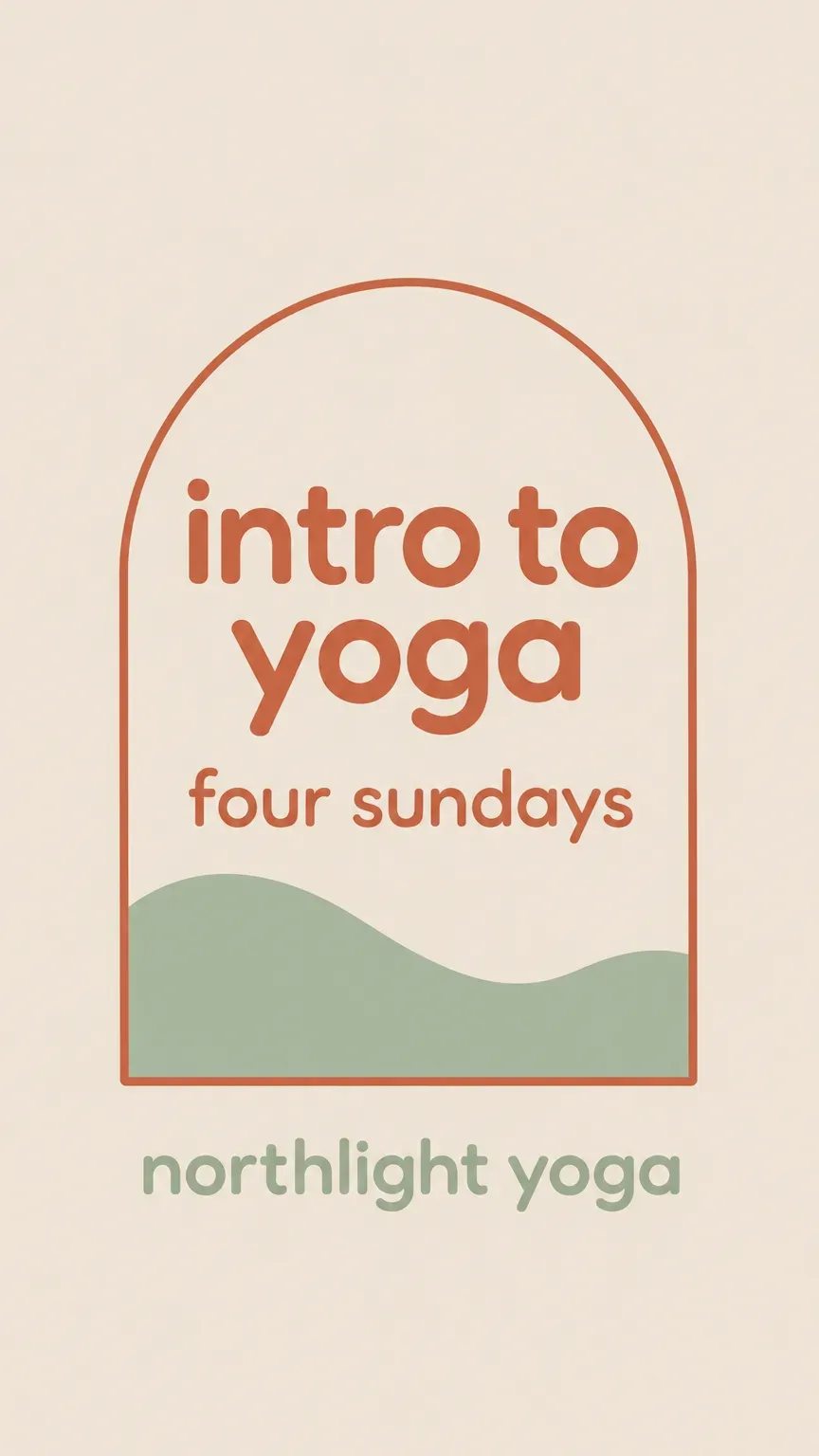
Here is what these posts can look like:
Posts for Northlight Yoga
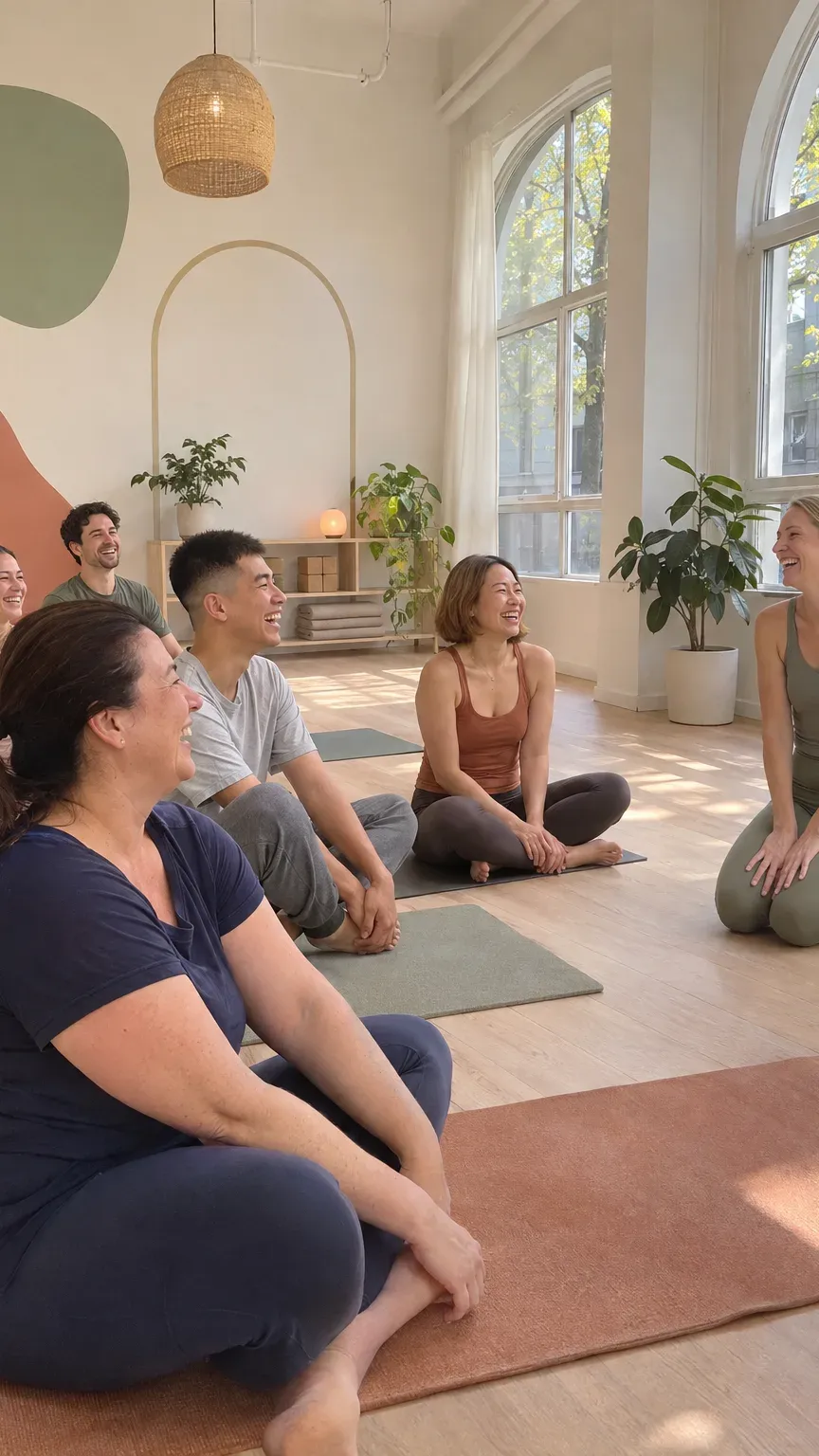

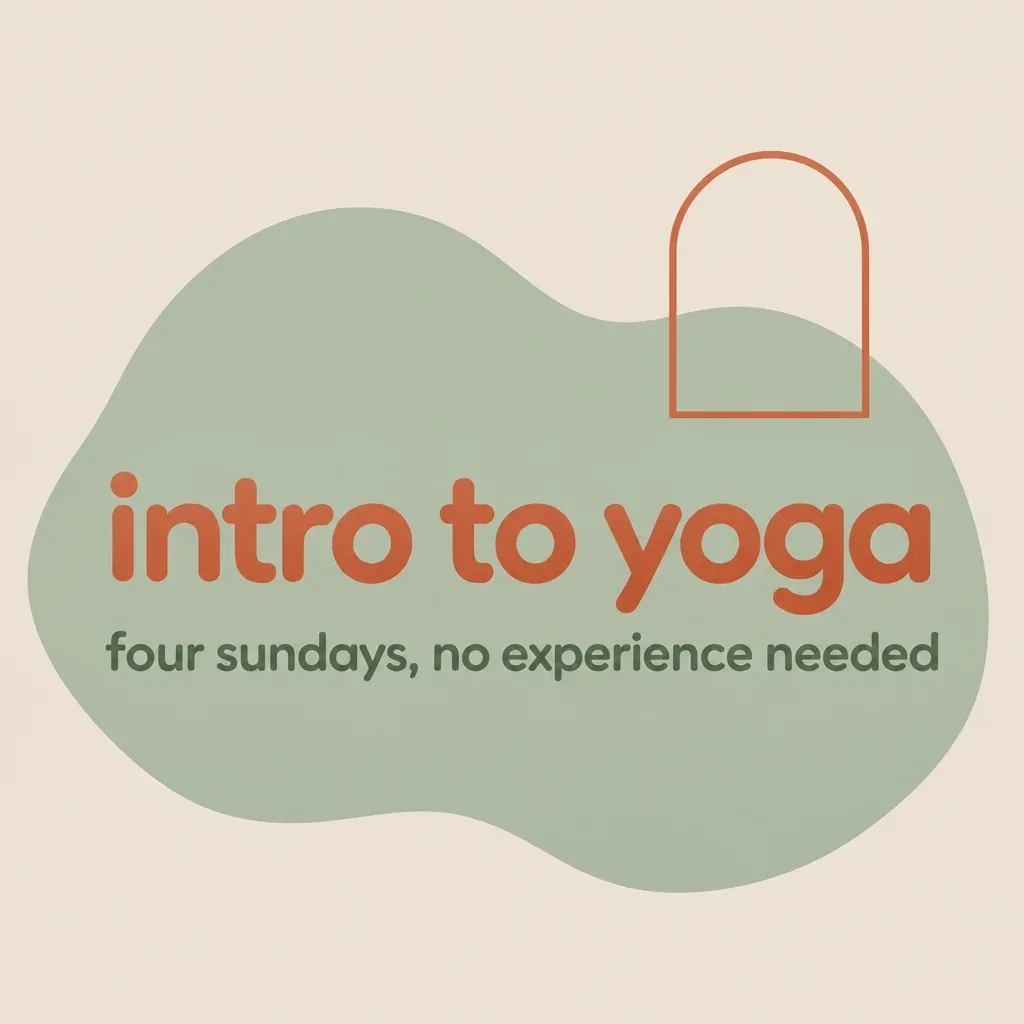
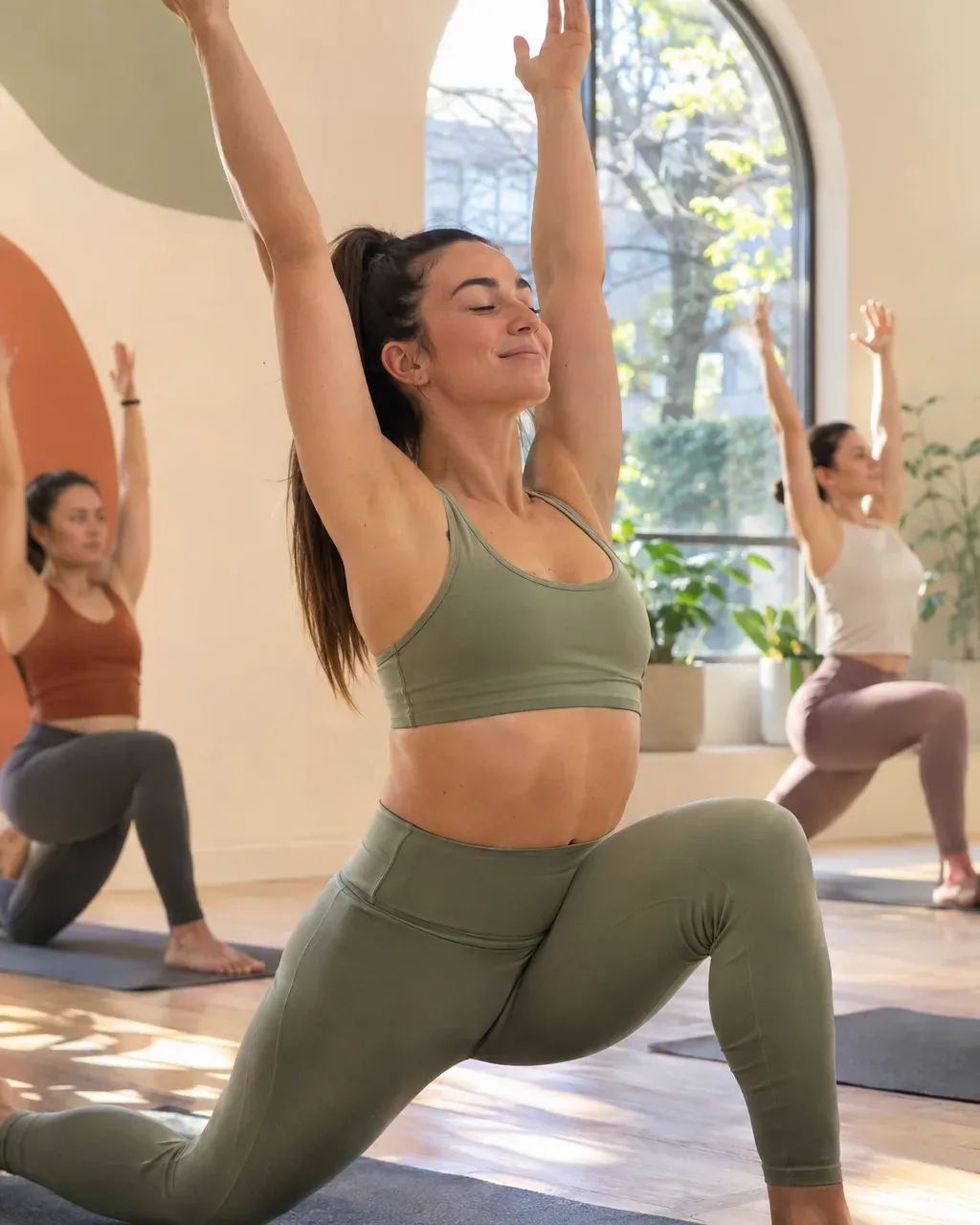
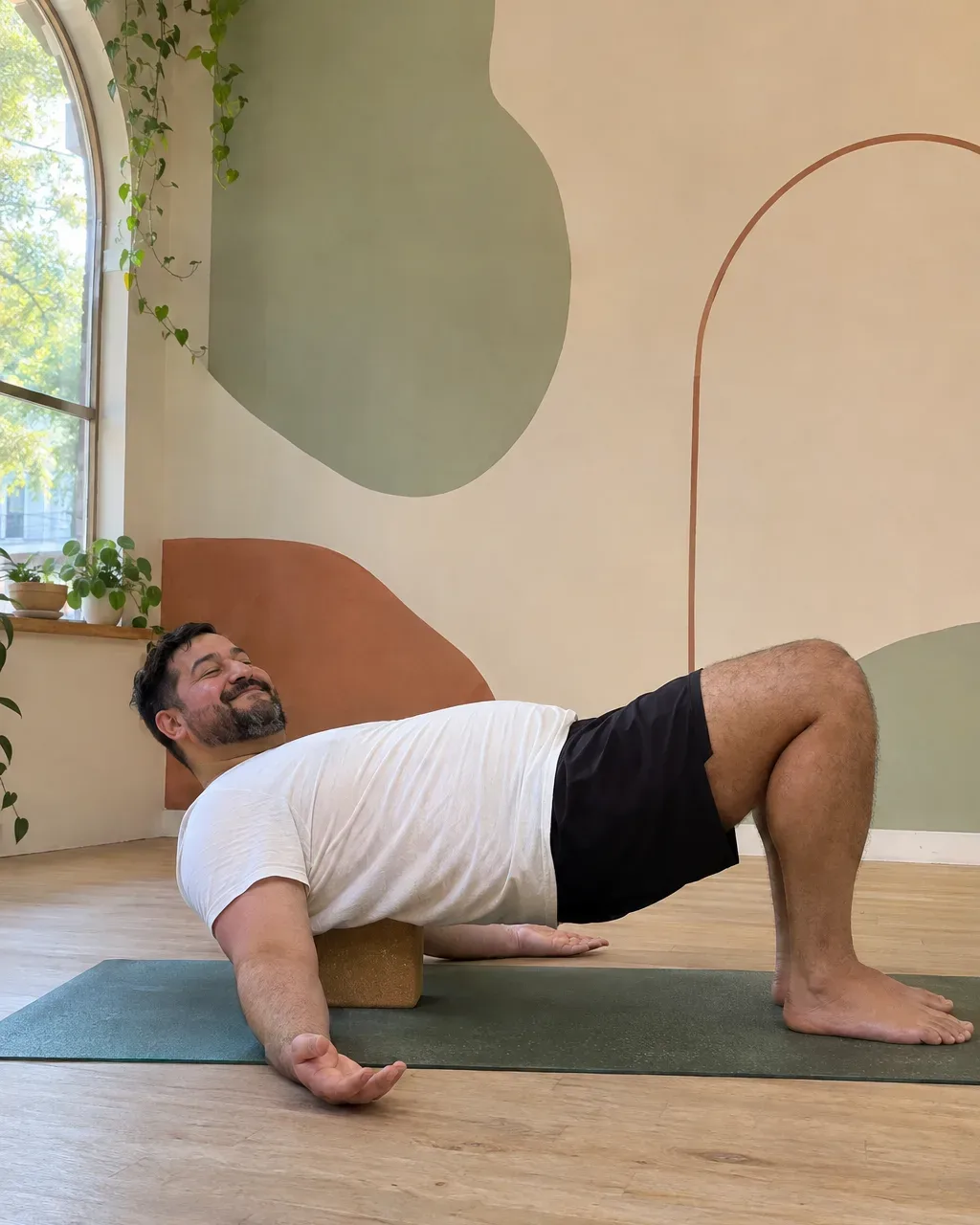


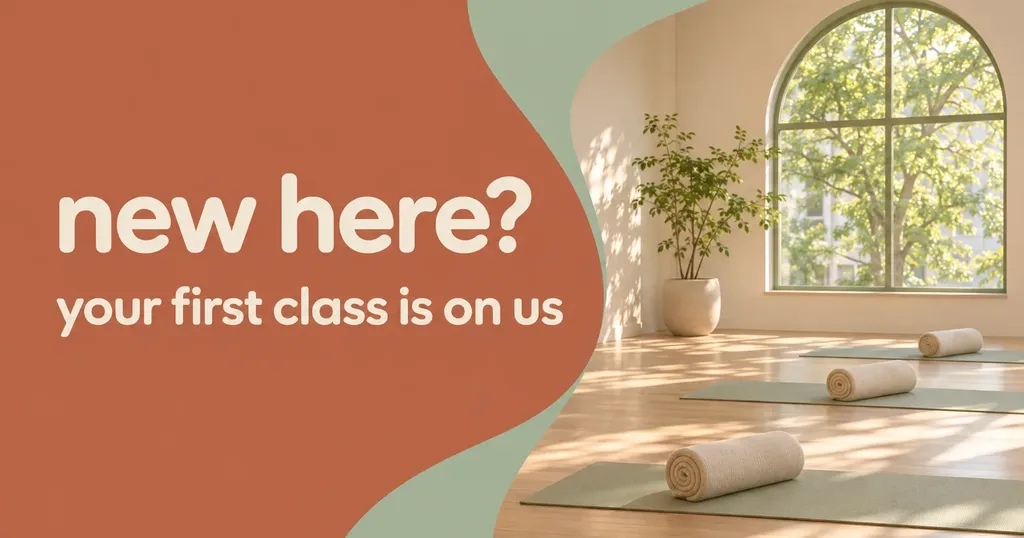

Ads for Northlight Yoga

Answer every day: messages from beginners ("I have never done yoga, is this class OK for me?"), booking questions, Google questions and reviews. A warm reply to a nervous beginner is often what gets them to come.
Look ahead each week: which classes still have spots, and post about those.
Plan around your seasons. The new year rush in January, a fresh start in September, summer schedules, and workshops at the change of seasons. Start talking about each beginner course a few weeks before it begins.
What to measure
Likes do not fill a class. These numbers do.
- First-class and intro bookings per week, and where they came from.
- How many intro clients become members.
- Members who keep coming, month to month.
- Class fill: which classes are full and which have room.
- Booking clicks, calls and direction requests on your Google profile, and reviews per month.
Look at a month at a time. New-year and back-to-school weeks always look different, so compare with the same season when you can.
Do's and don'ts
Do
- Show real classes with real people, beginners included
- Give every teacher a face and a voice
- Make one clear intro offer and repeat it everywhere
- Answer beginners' questions warmly and fast
- Ask before you post anyone in a class
- Start talking about each course weeks before it begins
Don't
- Show only advanced poses or the fittest members
- Use stock photos of people who are not yours
- Post quotes with nothing to book
- Let your schedule on Google go out of date
- Promise results you cannot stand behind
- Run ads before your intro offer and booking are clear
When your intro offer, booking and reviews are in place, small local ads on Instagram and Facebook can fill a beginner course, and Google ads can put you at the top when someone nearby searches for a studio. Keep the area close and point the ads at one clear first step.
A studio follows the same basics as other Local businesses: be easy to find, show the real thing, and look after the people who already come.
Frequently asked questions
More marketing guides like this


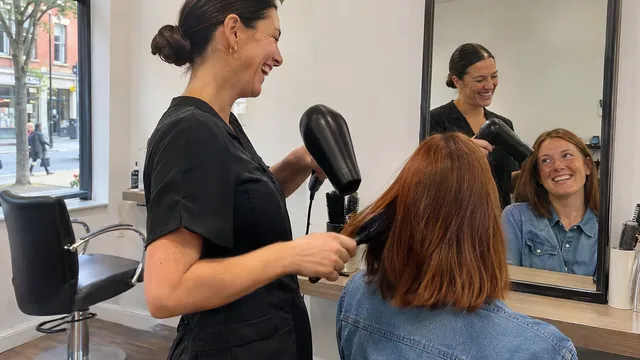



Where to start today
Decide on your intro offer and write it in one sentence. Put it in your Instagram bio and on your Google profile with a booking link that works on a phone. Then, at your next class, ask if you can film ten seconds of the flow. That is your first post, and your first step toward a full beginners' course.
The two things that matter most
Whatever you choose to do, two things decide whether your marketing grows: being consistent and being data-driven. Show up every week, not in bursts, because people forget a business that goes quiet. And look at what actually brought customers in before you plan the next week, so you do more of what works. Without both, you are mostly guessing, and growth comes and goes.
Let Huuve do it for you
Huuve does all of this for you on autopilot. It plans every week from what brought customers in, writes the posts and keeps you consistent, while you spend about 15 minutes approving it. That can save you 10+ hours a week. See how it works, or ask your own AI if Huuve fits you.

Try Huuve for 30 days
Huuve plans your studio's week, writes the posts and the replies, and you approve it all in about 15 minutes. If it is not for you, get your money back.
From $149 a month
30-day money-back guarantee